
Roughly one in four dollars earned at national GDP scale is earned by Nepalis working outside Nepal. That migration culture produces a workforce that is unusually ready for cross-border employment.
Roughly one in four dollars earned by Nepal — at the national, GDP-level scale — is earned by Nepalis working outside Nepal. The remittance-to-GDP ratio sits at approximately 26.6% based on 2023 data, the highest in South Asia and among the highest in the world. Over 3.5 million Nepali nationals work abroad, a figure that undercounts unofficial migration to India.
There is a number underneath that number. It is the number of Nepali families who have a brother in Doha, a sister doing her nursing degree in Sydney, a cousin in a kitchen in Seoul, a father who spent fifteen years on Gulf construction sites and came home with a small concrete house and a permanent lung condition. The financial statistic is one of the most cited facts about Nepal. The human texture underneath it is what makes Nepal a distinctive workforce.
What migration culture does to a workforce
When most of the families in a country have direct, lived experience with international work, several things happen that you do not see in countries without that culture.
Cross-cultural team dynamics feel less alien. A Nepali professional joining a foreign employer is almost never the first person in their family to have done so in some form. Digital payment systems are familiar from a decade of inbound remittances. Time-zone discipline is part of the family conversation rhythm. The basic emotional shape of working for someone in another country — the alternation of homesickness and pride — is part of the cultural inheritance.
This makes onboarding measurably faster. It also makes Nepali candidates more discerning. A workforce that has seen the inside of Gulf labour systems and Australian student visa restrictions knows what fair treatment looks like and what it does not.
The country itself
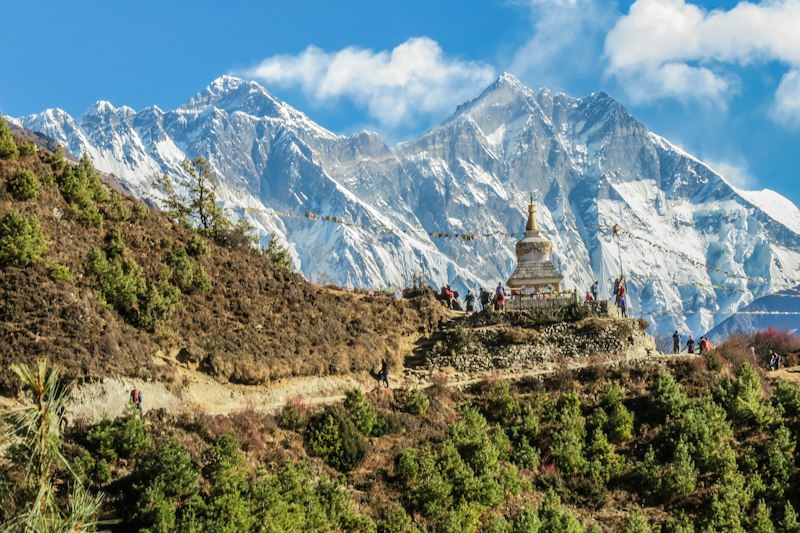
Nepal is a federal democratic republic of approximately 30 million people, sitting between India and China. The Bagmati province around Kathmandu is the country's skilled-professional centre. Madhesh province on the Indian border has different demographics, cultural ties to northern India, and an open-border migration corridor that is structurally different from the corridors to the Gulf and East Asia. Gandaki and Koshi provinces supply a significant share of foreign-deployed workers.
Nepal recognises 125-plus ethnic groups and 123 languages. Nepali is the official language and the lingua franca. English proficiency is high among urban, educated professionals — particularly in Kathmandu and among the large cohort of returning international students.
The Australia generation
Australia has become Nepal's dominant student-migration corridor. Nepali students are among the top five source nationalities for Australian student visas in most recent years. Many of these graduates return — or seek international remote work from abroad — bringing strong English fluency, exposure to Western workplace norms, familiarity with global curriculum standards, and an existing comfort with cross-cultural digital collaboration.
This cohort is, in our experience at Veltrix, one of the most underpriced talent pools in the region for foreign employers. They are functionally Western-trained in workplace habits but rooted in Nepali professional networks. For an employer trying to build an early team in South Asia without the cost structure of India's tier-one cities, this group is a genuine sweet spot.
Some practical things employers consistently get wrong
A few patterns we see repeatedly.
- The time zone. Nepal operates on UTC+5:45 — a unique forty-five-minute offset from neighbouring time zones. This matters more than it sounds. A daily standup that works for an Indian team at 10:00 IST is happening at 10:15 NPT, and the difference compounds across complex multi-region calendars. Build it into your scheduling system explicitly, do not treat it as a rounding error.
- The working week. Nepal's working week is Sunday to Friday. Saturday is the national weekly holiday — not Sunday. Foreign employers who schedule a "weekend offsite" on Saturday-Sunday lose half the Nepal team.
- The festival calendar. Nepal observes approximately 35 gazetted public holidays a year, one of the highest counts globally. The October-November Dashain-Tihar window is, for practical purposes, equivalent to the Western Christmas-New Year shutdown. Two to three weeks of reduced productivity around the period is normal. Plan for it; don't be surprised by it.
- SSF compliance. Nepal's Social Security Fund requires a total contribution of 31% of basic salary — 20% employer, 11% employee — and enrolment is now compulsory for all formal-sector employers. Whether a foreign employer's remote contractor arrangement triggers SSF obligations is a question for local counsel, not a question to assume away.
Where to look
For technical roles, Kathmandu University's School of Engineering and Tribhuvan University's strongest affiliated colleges (IOE Pulchowk in particular) produce industry-ready graduates. For finance and accounting, look for ICAN-qualified Chartered Accountants. For nursing, the Nepal Nursing Council (NNC) maintains a registry; verification of license numbers is straightforward and worth doing.
The closing thought
Nepal is small. The economy is small. The professional talent pool, in absolute terms, is small. But the migration culture has produced a workforce that is unusually ready for cross-border employment — psychologically, technically, and operationally — at the moment they walk into the interview.
For foreign employers looking for South Asian talent with measurably faster onboarding curves and lower cultural-friction overhead, Nepal is not a backup option. It is, in our experience, one of the most consistent quiet wins in the region.
Ready to build your cross-border team?
Veltrix Connect brings together verified international employers and recruitment agencies on one platform. Start the conversation today.
Connect with us